What Vets Actually Say About Grain-Free Cat Food
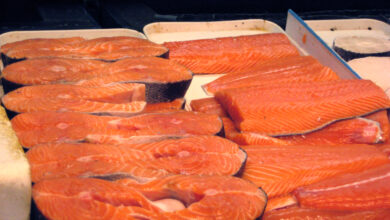
Your vet barely glanced at the bag before saying, “Grain-free isn’t necessary for cats.” You’d spent $74 on a 12-pound bag of the stuff — the one with the wolf on the packaging and the long ingredient list that started with “deboned salmon” — and now you’re standing in the exam room wondering if you’ve been doing it wrong for two years.
Here’s the thing most grain-free marketing doesn’t want you to sit with: the problem isn’t whether cats can eat grains. The problem is that most cat owners are solving the wrong question entirely. The real question isn’t “are grains bad?” It’s “what does a cat’s body actually need, and is grain-free helping or just costing more?” Those are two very different conversations, and the pet food industry has spent considerable money making sure you stay stuck on the first one.
1. Cats Aren’t Dogs — and the DCM Scare Proved It
Around 2018 and 2019, the FDA began investigating a potential link between grain-free diets and dilated cardiomyopathy (DCM) — a serious heart condition — in dogs. Pet owners panicked. The news cycle ran with it. And somewhere in the chaos, a lot of cat owners started quietly second-guessing their own grain-free choices, even though the investigation was focused almost entirely on dogs.
That distinction matters. Cats are obligate carnivores. Dogs are not. A cat’s digestive system is wired to pull nutrition from animal protein, not plant material. So when you see grain-free cat food loaded with peas, lentils, and chickpeas to replace the binding function of grains, you’re not necessarily looking at a cleaner product — you’re looking at a different set of carbohydrates doing the same structural job. The grain-free label doesn’t mean low-carb. It means the carb source changed.
Industry tracking data has consistently shown grain-free pet food commands a significant premium at retail — often 30 to 50 percent more per pound than comparable conventional formulas. That price gap exists because of marketing positioning, not nutritional superiority. Several veterinary nutritionists have said as much publicly, though you’ll rarely hear it from the brand reps at the pet store.
2. The Myth That Grains Are “Fillers” Deserves a Harder Look
The word “filler” gets thrown around constantly in pet food marketing. The implication is that grains — rice, oats, barley, corn — are junk calories stuffed in to pad the bag. That framing is misleading at best and manipulative at worst.
Cats don’t require carbohydrates the way humans do. That’s true. But “not required” doesn’t mean “actively harmful.” Brown rice, for instance, is digestible for cats and contributes some B vitamins and fiber. Oats have a reasonable amino acid profile. The argument that grains are automatically inflammatory, allergenic, or nutritionally useless is not well supported by veterinary science — and actual food allergies in cats, when they do occur, are more commonly triggered by animal proteins like beef, chicken, or fish than by grains.
A board-certified veterinary nutritionist I spoke with put it plainly: “Grain allergies in cats are pretty uncommon. If a cat is scratching or having GI issues, I’d look at the protein source before I’d look at the grain.” That’s not what the grain-free packaging suggests, but it’s consistent with what clinical case reports tend to show.
3. What “Ancestral Diet” Marketing Gets Wrong
One of the more persuasive grain-free arguments is the ancestral one — cats evolved hunting small prey, so their food should mirror that. Fair premise. But the execution usually falls apart in the fine print.
A wild cat eating a mouse is consuming muscle meat, organ tissue, small bones, the stomach contents of the prey (which often includes plant material), and moisture — lots of moisture. A dry grain-free kibble, no matter how many wolves are on the bag, shares almost nothing with that profile. The moisture content of dry kibble sits around 8 to 10 percent. A freshly caught mouse is closer to 70 percent water. If ancestral accuracy is the goal, the grain-free dry kibble still misses by a wide margin.
The cats most likely to benefit from something resembling an ancestral diet are the ones eating wet food — grain-containing or not — because the moisture content alone is closer to what their kidneys evolved to handle. Chronic kidney disease is one of the leading causes of death in domestic cats, and long-term low water intake is a known contributing factor. If you’re spending extra on grain-free dry food for your cat’s “natural” diet, you might be solving the wrong variable entirely.
4. A Real Example: What Switching Actually Looked Like
My own cat — a 9-year-old tabby named Vera — went grain-free about three years ago after I read one too many Reddit threads. I switched her from a mid-range wet food with rice to a grain-free pâté that cost about $1.80 per can, roughly 40 cents more per serving. Over a year, that added up to something close to $145 in extra spending.
Her coat looked about the same. Her litter box habits didn’t change. She didn’t lose weight or gain energy. At her annual checkup, my vet looked at her food log and said, “Honestly, the old food was fine. This one’s fine too. Neither is hurting her.” That was not what I wanted to hear after a year of careful label-reading.
I switched her back to a high-protein wet food with some grain content. She didn’t notice. Her bloodwork at the next visit was normal across the board. The only meaningful outcome was that I stopped spending the extra $12 a month.
That’s not a dramatic story. It’s a boring one. And boring is actually the honest answer for most healthy cats — the diet that works is usually not the most expensive one.
5. What Vets Are Actually Looking At When You Ask
When you bring up grain-free with your vet and they seem unfazed, it’s not because they haven’t thought about it. It’s because their clinical frame is different from a pet food marketing frame. Vets are looking at:
- AAFCO compliance — does the food meet the Association of American Feed Control Officials nutritional standards for complete and balanced diets? That’s the baseline that matters most.
- Protein quality and digestibility — not just whether the first ingredient is meat, but whether the overall amino acid profile supports the cat’s life stage.
- Moisture content — especially for cats with any history of urinary issues or kidney concerns.
- Taurine levels — cats cannot synthesize taurine on their own. Deficiency causes heart problems and vision loss. Any reputable cat food, grain-free or not, should list taurine explicitly.
Notice that “grain-free” doesn’t appear anywhere on that list. It’s not that it’s irrelevant in every case — cats with documented grain sensitivities do exist — but it’s a niche concern being marketed as a universal upgrade.
6. What Doesn’t Work (An Honest List)
Some approaches to cat nutrition that get repeated constantly but don’t hold up under scrutiny:
Switching food based on ingredient lists alone. The order of ingredients tells you something, but not everything. A food with chicken as the first ingredient and poor overall bioavailability is not automatically better than one with chicken meal third and a complete amino acid profile. Ingredient lists don’t tell you digestibility percentages or actual nutrient density.
Treating “grain-free” as a proxy for “low-carb.” As mentioned above, peas and lentils are carbohydrates. Some grain-free formulas have higher total carbohydrate content than grain-inclusive ones. If you’re trying to reduce carbs specifically, you have to read the guaranteed analysis, not just the marketing panel on the front of the bag.
Relying on pet store staff for medical nutrition advice. Pet store employees — even well-meaning ones — are not trained in veterinary nutrition. They’re trained in product knowledge and sales. The difference matters when your cat has a specific health condition.
Assuming expensive equals better. Premium positioning in pet food is a marketing strategy as much as a quality signal. Some of the most nutritionally sound cat foods on the market are mid-range in price. Paying $80 for a bag does not guarantee the food outperforms one at $40 in any clinical metric your vet would track.
7. The One Case Where Grain-Free Makes Genuine Sense
To be fair: grain-free diets are a legitimate choice for cats with confirmed food sensitivities that have been traced — through an elimination diet supervised by a vet — to a specific grain. That process takes 8 to 12 weeks minimum and requires strict ingredient control. It’s not a casual experiment. If your vet has walked you through it and grains came back as the culprit, then yes, grain-free is the right call for your specific cat.
But that scenario describes a small minority of cats. Most cats eating grain-free food are doing so because their owners made a reasonable but marketing-influenced decision — not because a vet identified a clinical need. There’s nothing shameful about that; the advertising is genuinely effective. But knowing the difference matters for where you put your next $74.
Three Small Things You Can Do This Week
You don’t need to overhaul anything. Start here:
- Pull your cat’s current food and find the AAFCO statement. It should say “complete and balanced” for your cat’s life stage. If it doesn’t, that’s worth a conversation with your vet regardless of grain content.
- Ask your vet one direct question at the next visit: “Is there a clinical reason my cat specifically should avoid grains?” If the answer is no, you have permission to stop spending extra for it.
- If your cat eats primarily dry food, consider adding one wet meal per day. The moisture benefit is real, and many wet options — grain-inclusive or not — cost less per serving than premium grain-free dry food.
Vera’s doing fine, by the way. She’s eating a mid-range wet food with rice in it. She has no complaints. She also knocked a full glass of water off my desk this morning, which suggests her energy levels are not suffering.