Start Cat Agility Training Without Fancy Equipment
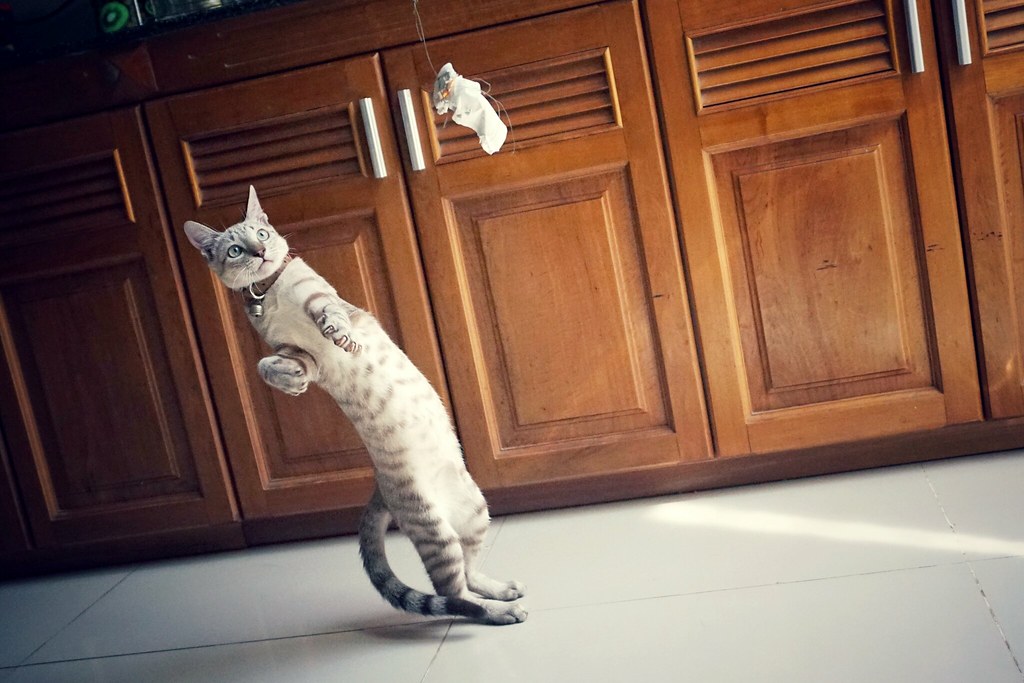
My cat Mochi jumped clean over a cardboard box I’d left in the hallway — didn’t even graze it — and then immediately sat down and stared at me like she deserved a treat for it. She wasn’t wrong. That was the moment I realized I’d been completely underestimating what she was capable of, and what we could actually do together if I stopped waiting until I had the “right” setup.
Here’s the thing most people get wrong about cat agility: they assume it’s a dog sport with a cat reluctantly dragged along. Or they see videos of elaborate courses with tunnels, weave poles, and A-frames, and they think, I need all of that before I can start. That’s the wrong frame entirely. The actual barrier to cat agility training isn’t equipment — it’s understanding how cats learn. Your cat doesn’t care about the obstacle. She cares about what happens right after the obstacle. Get that part right and you can start today with a cardboard box and a stick.
1. Why Cats Can Actually Do This (And Often Love It)
Cats are not indifferent to training. They’re indifferent to your agenda. That’s a meaningful difference. Studies in animal cognition have shown that domestic cats are capable of learning through operant conditioning — the same reward-based system used with dogs — but they respond better to shorter, more frequent sessions and they disengage faster when motivation drops. Some behaviorists working with shelter cats report that even 3-minute daily training sessions can produce noticeable behavioral changes within two weeks.
The American Association of Feline Practitioners has published guidelines on environmental enrichment that specifically mention training as a tool for reducing stress-related behaviors in cats. So this isn’t just a fun party trick. It has real welfare implications — especially for indoor cats who spend 14 to 16 hours a day in the same 900 square feet.
Mochi is an indoor-only cat. Before we started doing agility work, she would knock things off shelves starting around 6:30 PM every night, like clockwork. After two weeks of five-minute training sessions before dinner, that behavior dropped significantly. Coincidence? Maybe. But I’ll take it.
2. The Only Real Prerequisite: A Cat Who Follows Treats
Before you build anything, buy anything, or watch another YouTube video about weave poles — test this one thing. Hold a treat or a small piece of your cat’s favorite food (for Mochi it’s freeze-dried chicken, the kind that comes in a small resealable bag and smells like the inside of a pet store) about six inches from her nose. Walk slowly backward. Does she follow?
If yes, you have everything you need to start.
If no, spend the first week just doing lure work. Sit on the floor. Let her sniff the treat. Move it slowly, reward generously when she follows even a few steps. Some cats get this in one session. Others — particularly rescues with limited handling history — take longer. Don’t rush it. The lure is your most important piece of “equipment,” and it costs about $8.
3. Build Your First Course From What’s Already in Your House
Here’s the actual starter setup I used, zero dollars spent:
- A hoop: My arms, bent into a circle, held low to the ground. Mochi walked through it the first day. By day four, she was trotting.
- A jump: A wooden dowel laid across two stacks of hardcover books. Start at two inches off the ground — seriously, two inches. Raise it only after she’s jumping confidently, not just stepping over.
- A tunnel: A paper grocery bag with both ends cut open. Some cats want nothing to do with this at first. That’s fine. Leave it out for a few days so it stops being new and threatening.
- A platform: An upside-down plastic storage bin with a yoga mat square on top so it doesn’t slip. This teaches targeting — getting your cat to go to a specific spot on cue.
That’s it. That’s a course. Four obstacles, all sourced from a kitchen, a closet, and a recycling bin.
4. The Session Structure That Actually Works
Three minutes. Set a timer. This is not a drill — three minutes is genuinely enough when you’re starting out, and going longer usually backfires because cats make their own decisions about when the meeting is over.
Structure each session like this:
- One minute of something your cat already knows and does well. Build confidence first.
- One to one-and-a-half minutes introducing or practicing the new obstacle.
- Thirty seconds of “jackpot” — multiple small treats in rapid succession for anything that even resembles the behavior you want.
Train before meals, not after. A full cat is a disinterested cat. I do Mochi’s sessions right before her 5 PM feeding — she’s hungry enough to be motivated but not so frantic that she can’t focus.
Don’t train every single obstacle every single session. Pick one or two. Repetition on fewer obstacles beats scattered attempts at everything.
5. A Real Week, Including the Day It Completely Failed
Week two of training Mochi on the jump:
Monday: She cleared the two-inch dowel four times in a row. I got excited and raised it to four inches. She walked around it twice and then left the room. Session over.
Tuesday: Back to two inches. She jumped it immediately, like nothing had happened. I did not raise the height. I just rewarded and ended on a high note.
Wednesday: Raised to three inches. She jumped it twice, sniffed it once, jumped it again. Good session.
Thursday: She was not interested. Sat down after the first jump and started grooming. I gave her the treat anyway, put everything away, and called it done. Two minutes total.
Friday: Best session of the week. Jumped the three-inch bar six times, then followed me through the arm-hoop twice without any hesitation.
The lesson from Monday is the most important one: your cat will tell you when you’ve moved too fast. She won’t argue about it. She’ll just leave. Go back to the easier version. There’s no shame in it — it’s just information.
6. What Doesn’t Work (And Why People Keep Trying It Anyway)
I have opinions here, and I’m going to share them.
Forcing repetition when the cat has disengaged. The session is over when your cat decides it’s over. Trying to “get one more rep” after your cat has walked away or started grooming is not persistence — it’s eroding the positive association you’ve been building. You’re not training the obstacle anymore; you’re training your cat to dread the session.
Using toys instead of food as the primary reward during early training. Some cats are toy-motivated, and eventually you can phase toys in. But in the beginning, food is faster, cleaner feedback. A treat appears and disappears in two seconds. A wand toy creates arousal that can make it hard to reset between reps. Start with food. Adjust later.
Building a full course before the cat knows individual obstacles. I’ve seen people on Reddit set up six-obstacle courses on day one and then wonder why their cat just wanders through ignoring everything. Each obstacle needs to be a known, rewarded behavior before it becomes part of a sequence. Sequence training is week four or five, not day one.
Training in a high-traffic area of the house. The living room with the TV on and two kids doing homework is not where your cat is going to learn anything new. Pick the quietest room you have. Even a bedroom works. Distractions kill early learning sessions faster than anything else.
7. When to Think About Actual Equipment
After about six to eight weeks of consistent work with household items, you’ll know whether your cat genuinely enjoys this. If she’s running to the training area when she sees you pick up the treat bag — that’s the sign. That’s when it makes sense to invest a little.
A basic starter agility kit for cats (typically including a collapsible tunnel, a few jump bars, and weave poles) runs between $30 and $60 from various pet supply retailers. Some people buy dog agility equipment and modify it, since the small dog sizes are often the right scale. You don’t need anything competition-grade to have a great time with your cat.
There is an organized cat agility community in the US — events have been held at cat shows and specialty expos — but even if you never compete, the training itself is the point. The bond it builds is real. Mochi now comes when I call her name about 80% of the time, which any cat owner knows is basically a miracle.
Your Next Three Steps, Each Taking Under Five Minutes
Don’t overhaul your routine. Just do these three things this week:
Tonight: Find out if your cat will follow a treat for six steps across the floor. That’s the whole experiment. You’ll know in sixty seconds whether you’re ready to move forward or whether you need a few days of lure work first.
This week, one session: Set up one obstacle — just one. The arm-hoop is the easiest. Sit on the floor, make a circle with your arms, hold a treat on the other side, and see if she walks through. If she does, that’s a win worth celebrating. If she doesn’t, spend the session just getting her comfortable approaching your arms. No judgment either way.
Before your next session: Pick a consistent time. It doesn’t have to be 5 PM — it just has to be the same time relative to something (before feeding, after you get home from work, whenever). Cats respond to routine, and a predictable training window helps them show up mentally, not just physically.
Mochi is currently working on a four-obstacle sequence. She gets it right about two-thirds of the time, sprints past the jump entirely about once a session, and occasionally sits down in the middle of the course and demands treats for nothing. That’s where we are. It’s imperfect and it’s great.