Micro Pig Care: What Vets Actually Recommend Now

The breeder called the pig “micro.” She was supposed to stay under 30 pounds. By her second birthday, she weighed 87 pounds and had figured out how to open the pantry door. That story isn’t rare — it’s basically the origin story for half the pig rescue cases in the US right now. I’ve heard versions of it from three different exotic animal vets in the past year alone.
Here’s the real problem with micro pig care: it’s not that people don’t love their pigs. They do. Obsessively. The problem is that most care guides were written around what people wanted pigs to be — tiny, low-maintenance, apartment-friendly — instead of what pigs actually are: highly intelligent, emotionally complex animals with specific physical needs that most first-time owners are completely unprepared for. The gap between the fantasy and the biology is where things fall apart.
So this guide is built on what vets who actually treat pigs — not just farm large-animal vets, but exotic and companion animal specialists — are recommending in 2026. Some of it has shifted in the last few years. Some of it contradicts what you’ll find on breeder websites. All of it is worth knowing before you’re standing in your kitchen at 11:30 p.m. Googling “why does my pig keep biting the wall.”
1. Forget “Teacup.” Focus on the Adult Weight Range Instead
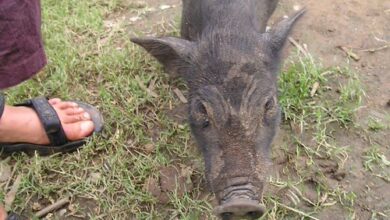
There is no such thing as a teacup pig breed. That’s not an opinion — it’s biology. “Micro pig” is a marketing term, not a classification. What breeders typically sell under that label are potbellied pigs or mixed miniature pig breeds that have been underfed to stay small, or simply young pigs photographed next to oversized props to look tinier than they are.
Most companion pigs in the US — the kind sold as “micro” or “mini” — reach between 50 and 150 pounds as adults, with a significant number landing in the 75 to 100 pound range. Some go higher. Genetics, diet, and whether the pig is spayed or neutered all affect final size, but the honest answer is: you don’t know how big your pig will get until they’re about three years old, which is when most pigs finish growing.
What vets recommend now is simple: ask the breeder to let you meet both parents in person, not on video. Parent size is the single best predictor of adult size. If a breeder won’t show you the parents — or if the parents are suspiciously small — that’s information.
2. The Diet Protocol That Actually Holds Up
Pig nutrition has gotten more specific in recent years, and the old “just feed them pig pellets and some fruit” approach isn’t cutting it anymore. Companion animal vets now generally recommend a diet structured around three components: a species-appropriate pellet as the base, fresh vegetables as a significant daily supplement, and very limited fruit.
The pellet question matters more than people realize. Pigs should eat pellets formulated specifically for miniature or companion pigs — not hog grower feed, which is designed for rapid weight gain in livestock. A 25-pound bag of a quality mini pig pellet typically runs $25 to $40 depending on brand and region. Feeding guidelines on the bag are usually a starting point, not gospel — your vet should help you adjust based on your pig’s actual weight and activity level.
Fresh vegetables should make up roughly 25% of the diet. Leafy greens, cucumbers, bell peppers, and carrots work well. What doesn’t work: avocado (toxic to pigs), onions, and anything high in oxalates in large amounts. Fruit gets pushed as a treat everywhere you look — and pigs love it — but the sugar content leads to obesity faster than most owners expect. One small piece of apple a day is genuinely a treat. A cup of grapes is not.
One thing that’s shifted in vet recommendations: more emphasis on foraging opportunities. Scattering food in the yard or hiding it in a rooting box (a container filled with dirt or smooth river rocks) slows eating, reduces boredom-driven behavior problems, and mimics how pigs naturally feed. It costs almost nothing and makes a measurable difference.
3. Veterinary Care Is Harder to Find Than You Think
This is the part nobody tells you before you buy a pig. Most general practice vets don’t treat pigs. Some will try, but pigs have different physiology, different drug sensitivities, and different behavioral responses to handling than cats or dogs. You need either an exotic animal vet with pig experience or a large animal vet who is comfortable with companion pigs — and those two categories don’t always overlap.
Industry data from companion animal surveys suggests that access to qualified exotic animal veterinary care is a significant challenge in rural and suburban areas of the US, with many pig owners traveling 45 minutes or more to reach a vet with swine experience. Before you bring a pig home, find that vet. Call the practice, ask specifically if they treat potbellied or miniature pigs, and ask how often. A vet who sees one pig a year is not the same as one who sees pigs weekly.
Routine care for a healthy companion pig includes: an annual wellness exam, hoof trimming every six to eight weeks (this is not optional — overgrown hooves cause joint problems), and dental checks. Spaying or neutering is strongly recommended by most companion pig vets — intact females cycle frequently and can develop uterine issues; intact males can become aggressive and develop strong odors. That surgery typically runs $300 to $600 depending on location and the pig’s size, and it should only be done by a vet experienced with porcine anesthesia.
4. Behavioral Health Is Not a Bonus — It’s the Core
Pigs are routinely ranked among the most cognitively complex domestic animals. They problem-solve, they remember faces, they hold grudges (genuinely), and they get bored in ways that manifest as destructive behavior. A pig left alone in a yard with nothing to do will root up the entire yard. A pig kept in a small space without stimulation will become aggressive or depressed.
What vets and animal behaviorists are emphasizing more in 2026: pigs need social contact. Ideally, that means another pig. A single pig bonded to humans can do okay, but they need significant daily interaction — not just presence, but engagement. Training sessions, even five minutes twice a day, help. Pigs learn commands faster than most dogs. That’s not a fun fact; it’s a management tool. A pig that knows “sit,” “stay,” and “back up” is a pig you can redirect before a situation escalates.
Aggression in pigs — charging, biting, head swiping — is almost always rooted in one of three things: resource guarding around food, a dominance challenge that wasn’t addressed early, or fear. Punishment doesn’t work and makes it worse. What works is consistent boundary-setting from the start, never hand-feeding (feed from a bowl, not your fingers), and getting a behaviorist involved early if problems start, not after six months of hoping it resolves.
5. Housing: The Outdoor-Indoor Balance
Pigs need outdoor access. That’s not negotiable for long-term health. They need to root, to feel sun on their skin (though they sunburn easily and need shade plus sunscreen on exposed pink skin during summer — yes, actual sunscreen), and to move more than a living room allows. A secure outdoor space with enrichment — a mud wallow if possible, rooting opportunities, shade structures — makes a real difference in temperament and physical health.
Indoor housing should include a comfortable sleeping area with blankets (pigs love to nest), away from drafts. Pigs are sensitive to cold and to heat. They don’t regulate temperature through panting the way dogs do, and they have no sweat glands. In hot weather, a shallow water tub or misting fan in the outdoor space is practical, not optional.
One concrete thing: don’t use wood shavings or cedar bedding. The aromatic oils in cedar are harmful to pigs’ respiratory systems. Blankets, straw, or hay work. It’s one of those details that doesn’t come up until someone’s pig has chronic respiratory issues and a vet traces it back to the bedding.
What Doesn’t Work — And Why
Feeding pigs “pig chow” from the farm supply store. That feed is formulated for fast weight gain in market hogs. Using it on a companion pig is like feeding a child a diet designed for a competitive powerlifter. It leads to obesity, joint stress, and shortened lifespan.
Assuming the pig will “calm down” with age without training. Pigs don’t mellow out the way some dogs do. An untrained two-year-old pig with boundary issues is a 75-pound animal that has been practicing those behaviors for two years. Early training isn’t a nice-to-have.
Keeping a single pig isolated most of the day. People do this thinking the pig is fine as long as it’s fed and has space. Pigs are herd animals. Isolation causes chronic stress, which shows up as repetitive behaviors, aggression, and health problems. This isn’t an opinion — it’s consistent with what animal welfare researchers have documented in swine behavior studies.
Relying on a breeder for health advice instead of a vet. Breeders have financial incentives that don’t always align with your pig’s long-term health. Some are excellent and ethical. Some aren’t. A vet with pig experience is the right source for medical and nutritional guidance.
A Real Week, With the Rough Edges Included
A friend of mine has had her potbellied pig, a six-year-old named Cordelia, for four years. Her week looks like this: morning feeding at 7:00 a.m. with measured pellets and whatever vegetables she has — usually kale or cucumber. Outdoor time from about 8:00 to 10:00 a.m. in a fenced side yard. Two five-minute training sessions daily, one mid-morning and one before dinner. Hoof check every Sunday.
The week that didn’t work: she ran out of mini pig pellets and substituted regular hog pellets for five days. Cordelia gained noticeable weight and became more aggressive around feeding time. It took three weeks of correct diet to stabilize. That’s the kind of detail that matters — the consequences aren’t theoretical, and they’re not always immediately reversible.
She also skipped the training sessions for two weeks during a work crunch. Cordelia started nudging harder for food, then started charging at her legs. Reestablishing the routine took consistent effort over ten days. The pig hadn’t “forgotten” — she’d just recalibrated what behaviors got results.
Three Things You Can Do This Week
If you already have a pig: call one veterinary practice today and ask specifically whether they treat companion pigs and how often. Just that call. If the answer is no or vague, find a practice that says yes before you need one in an emergency.
If you’re considering getting a pig: spend 20 minutes this week reading through the North American Potbellied Pig Association’s educational resources online. They’re free, they’re written by people who actually work with pigs, and they’ll give you a more accurate picture than most breeder websites.
If your pig is already showing behavioral issues: start one five-minute training session tomorrow. Not a full program — one session, one command, positive reinforcement only. Do it again the day after. That’s where it starts.