Keep Your Cat’s Paws Safe This Winter: Salt and Cold Prevention
Last February, I watched my neighbor’s gray tabby — a big, grumpy guy named Biscuit — come limping back from a quick trip across the salted sidewalk in front of their house. It was maybe 18°F outside, the kind of cold that makes your nose burn after about forty-five seconds. Biscuit was holding one front paw up off the ground, licking it obsessively before he even made it through the door. The culprit wasn’t frostbite. It was the ice melt salt crusted between his toes, already starting to irritate the skin.
Most cat owners who let their pets outside — even just briefly — think about the cold in terms of temperature. “Is it too cold for her to be out?” That’s the wrong question. The real danger in winter, for a cat’s paws specifically, isn’t the cold air. It’s the chemical contact. Ice melt products, road salt, and even certain antifreeze residues on pavement can cause chemical burns, cracked paw pads, and — if your cat licks their paws, which they always do — internal toxicity. The temperature is uncomfortable. The salt is actively harmful.
1. Understand What’s Actually on That Pavement
Standard rock salt (sodium chloride) is the most common ice melt product used on driveways and sidewalks across the U.S., but it’s far from the only one. Many municipalities and homeowners use calcium chloride or magnesium chloride blends, which work at lower temperatures but generate heat as they dissolve — meaning they can cause faster irritation on soft paw pad tissue. Some products also contain potassium chloride or urea-based compounds.
The problem isn’t just one chemical. It’s that your cat walks through a cocktail of whatever your neighbors, your city, and the parking lot down the street decided to use that week. Veterinary toxicology resources note that salt-based ice melt products can cause vomiting, drooling, and lethargy when ingested — and a cat grooming their paws after a walk is guaranteed ingestion. This isn’t hypothetical. It’s the predictable outcome of every unsupervised outdoor winter trip.
One detail most people miss: the salt residue stays active on pavement long after the ice melts. You might send your cat out on a sunny 35°F afternoon thinking the sidewalk looks fine. The dry white crust left behind is still sodium chloride. Still irritating. Still getting between toe pads.
2. Check Paws Every Single Time — Not Just in January
This sounds obvious. It isn’t practiced. I know because I spent about two winters being inconsistent about it — wiping paws after every outdoor trip felt like overkill until I noticed my cat Opal developing small cracks on her rear paw pads around late November, before the heavy ice season even started. Dry air plus mild salt exposure was enough.
The routine that actually works takes under 90 seconds:
- Use a damp, warm cloth — not cold, cats hate cold on their paws
- Wipe between each toe, not just the bottom of the pad
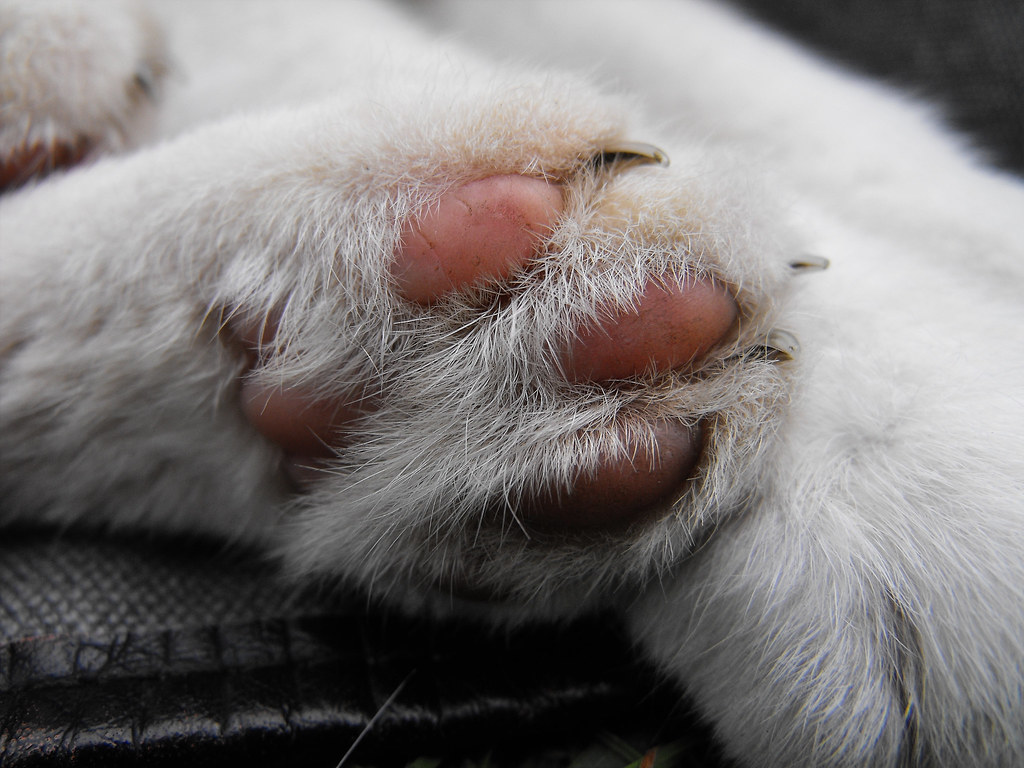
- Look for redness, raw spots, or any white crusting
- Let the paw dry before the cat walks on a cold floor again
Do this every time your cat comes in from outside, from November through mid-March, depending on your region. If you’re in Minnesota or upstate New York, extend that to April. If you’re in a milder climate like the mid-Atlantic — don’t assume you’re off the hook. A single ice storm followed by a city salt truck means contaminated sidewalks for days.
3. Apply Paw Balm Before Going Out, Not Just After
Most people treat paw balm as a post-damage remedy. You see cracked pads, you apply balm. That’s reactive. The smarter move is applying a thin layer of paw balm or protective wax before outdoor exposure, especially before walks or any time your cat might roam where salt has been applied.
Products designed for dogs work equally well for cats, as long as they’re labeled non-toxic and pet-safe — because again, your cat will lick it off. Look for balms made with natural waxes like beeswax or carnauba, with no artificial fragrances or xylitol (which is toxic to pets). Several brands sell these at major pet retail chains. A container the size of a lip balm tin lasts most of a winter for one cat.
The barrier isn’t perfect. It doesn’t mean you skip the wipe-down when they come back in. But it meaningfully reduces direct chemical contact, especially between the toes where cracks are most likely to start. Think of it the way you’d think about sunscreen — it doesn’t block everything, it just reduces damage over cumulative exposure.
4. A Real Week of Trying This — Including the Day It Fell Apart
In January 2025, after a particularly bad ice storm hit the mid-South, I started a strict paw-care routine with Opal, who at the time was about six years old and had limited outdoor access through a screened porch that opened to a small fenced yard. The yard had no salt, but the path from the back door to the porch crosses about eight feet of concrete driveway — and my neighbor’s runoff had reached it.
Days one through four went well. Balm before she went out in the morning, wipe-down when she came back in. I used a small ceramic dish with warm water and a dedicated washcloth that lived on the mudroom shelf. Opal tolerated it. Barely. She’s not a patient cat.
Day five, I was running late for work and skipped the wipe-down. Just forgot. That evening I noticed she was licking her left rear paw more than usual. No visible damage, but the behavior was there — the signal. Day six I was back on routine. By day eight, I’d stopped seeing the excessive licking.
The lesson isn’t that one missed day causes a crisis. It’s that the behavior — the excessive grooming — is your early warning system. If you see it, that’s your cat telling you something got on their paws. Don’t wait for visible cracking to respond.
5. What Doesn’t Work — And Why People Keep Doing It Anyway
Here’s where I’ll be direct, because there’s a lot of well-meaning but genuinely unhelpful advice floating around on this topic:
Cat booties are not a realistic solution for most cats. I know. They look adorable. But the percentage of cats that will tolerate shoes long enough to serve a protective function is tiny. Most cats will remove them within thirty seconds, often before they even reach the door. For the cats that do tolerate them, they can be useful — but counting on booties as your primary paw protection strategy is setting yourself up to skip protection entirely when the cat inevitably refuses them.
Petroleum jelly (plain Vaseline) is not the same as paw balm. It’s been recommended in some corners of the internet as a budget alternative. The problem is that petroleum jelly sits on the surface without providing much barrier protection, and when ingested in small amounts repeatedly, it can act as a mild laxative. Not dangerous in trace amounts, but not what you want your cat consuming daily. Use a product made for the purpose.
Restricting outdoor access entirely isn’t always practical or kind. Some cats are indoor-outdoor cats with years of established routine. Going cold turkey in winter causes stress behaviors — more yowling, furniture scratching, anxiety. Managing winter exposure smartly is more sustainable than a full lockdown that gets abandoned by February anyway.
Checking paws “when they seem uncomfortable” is too late. By the time your cat is visibly limping or licking obsessively, the irritation has already been building for a while. Proactive checking takes less time than reactive treatment — and a vet visit for chemically irritated paw pads costs significantly more than a $12 tub of balm.
6. The Salt Your Cat Walks on Isn’t Always Yours to Control
This is the piece of the problem that feels frustrating but matters. You can use pet-safe ice melt on your own driveway — products labeled as safer for pets typically use different compound blends that are less caustic at low concentrations, though “pet-safe” doesn’t mean “harmless in quantity.” You can ask your immediate neighbors to do the same.
But the sidewalk in front of your building? The parking lot at the vet? The strip of concrete between your apartment complex’s entrance and the street? You don’t control those. City crews salt heavily after storms. Property management companies use whatever’s cheapest. The only layer of protection you reliably control is what you put on your cat’s paws before they go out and what you remove when they come back in.
That’s not a pessimistic point — it’s a clarifying one. Focus your energy where you have leverage. A good pre-outing balm application and a consistent post-outing wipe-down does more than lobbying your HOA to switch salt brands, even if both are worthwhile.
7. Watch for These Specific Signs of Paw Damage
Winter paw problems rarely announce themselves dramatically. You’re looking for subtle, early signals:
- Increased paw licking — especially focused on one foot, or between the toes
- Slight limping or favoring one paw when walking on hard floors
- Visible cracking on pad edges — the outer rim of the pad tends to crack first
- Redness between the toe pads — harder to see on dark-colored cats, use a flashlight
- Small cuts or raw-looking spots from repeated salt contact breaking down the skin
If you see cracking that’s deep enough to bleed, or redness that’s spreading, that’s a vet conversation — not a “I’ll apply more balm and see” situation. Chemical burns from concentrated salt exposure can get infected. A quick call to your vet’s office to describe what you’re seeing is free and takes three minutes.
8. The Paw Check as a Bonding Moment (Seriously)
I know this sounds like a stretch, but hear me out. Opal went from tolerating paw checks to expecting them — and eventually to using them as a cue for her evening feeding. I always checked her paws after her last outdoor trip of the day, which happened around 5:30 PM, followed immediately by dinner. After about three weeks, she started coming to find me at 5:30 and presenting her paws. Not because she understood the health benefit, obviously. Because she’d learned the sequence.
Building paw care into a routine your cat can predict makes the whole thing easier. Cats are creatures of pattern. If the wipe-down reliably precedes something they like — a treat, a feeding, a play session — they’ll stop fighting it. They won’t love it. But they’ll tolerate it, which is all you need.
Start this week, not when the next ice storm hits. Three small moves, right now:
- Put a washcloth and a small bowl near your most-used door today — just having it there changes the habit
- Buy one paw balm at your next pet store or pharmacy run — $10 to $15, and it’ll last the season
- Tonight, pick up each of your cat’s paws and just look — get familiar with what their healthy pads look like before you’re comparing against an irritated one
That’s it. Don’t redesign your whole routine. Just those three things, and you’re already ahead of where most cat owners are when February hits and their cat comes home limping.