How to Socialize Your Puppy When You’ve Been Isolated
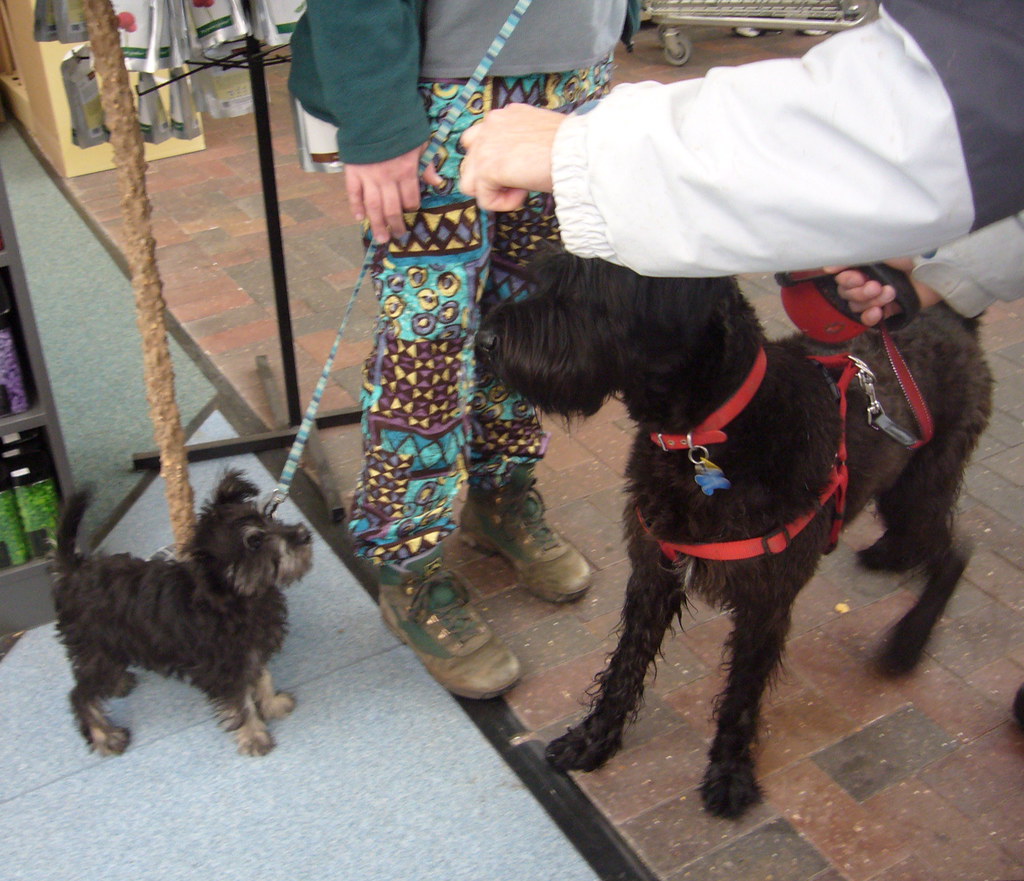
Your new puppy arrived at 11 weeks old and hadn’t seen a stranger, a staircase, or a garbage truck in his entire life. Neither had you, really — not in any meaningful way. You’d been ordering groceries online, skipping the farmers market, working from a spare bedroom that smelled like old coffee. The pandemic years did something strange to a lot of us: they made small, quiet, uneventful days feel normal. And then people started getting dogs. Millions of them.
Here’s the thing nobody wants to say out loud: the socialization crisis isn’t just about puppies raised in isolation. It’s about owners raised in isolation too. A person who hasn’t been in a crowded coffee shop in two years, who flinches a little when a neighbor waves from across the street, is not well-positioned to introduce a 10-week-old dog to the chaos of a Saturday morning at the park. The problem isn’t that your puppy missed the window — it’s that you and your puppy missed it together, and now you’re both starting over at the same time.
That framing changes everything about how you approach the process.
Why the Socialization Window Still Matters — and Why It’s Not Slammed Shut
The classic socialization window for puppies runs roughly from 3 to 14 weeks of age. During that stretch, a puppy’s brain is unusually plastic — new experiences get filed as “normal” rather than “threatening.” After that window closes, the brain shifts into a more defensive mode. New things become suspicious by default.
Veterinary behaviorists have been clear on this for decades. The American Veterinary Society of Animal Behavior has published position statements emphasizing that puppies who miss early socialization are significantly more likely to develop fear-based behaviors later in life. That data is not new. What is newer — and what a lot of trainers started noticing around 2022 and 2023 — is the volume of dogs showing up at training classes at 8 or 9 months old who had never heard a lawn mower, never walked on a metal grate, never seen a person wearing a bicycle helmet. Dogs who were technically socialized to one human family and exactly nothing else.
The window matters. But here’s what also matters: the brain never fully stops adapting. It just gets slower. More effortful. What takes a puppy two exposures might take an adult dog twenty. That’s not a reason to give up. It’s a reason to be patient and deliberate instead of casual and optimistic.
The “Flooding” Approach Will Backfire — Here’s What to Do Instead
A lot of well-meaning owners, once they realize their puppy is behind on socialization, overcorrect hard. They take the dog to a busy dog park on a Tuesday afternoon and let twenty strange dogs mob him. They invite six people over at once. They set up a “socialization playdate” that is, functionally, a small party where the puppy has no escape route.
This is flooding — exposing an anxious animal to the trigger at full intensity with no graduation — and it almost always makes things worse. A puppy who gets overwhelmed at a dog park doesn’t learn “dog parks are fine.” He learns “I was terrified and I couldn’t get away.” That experience writes itself into his nervous system.
The better method is systematic desensitization with counter-conditioning. It sounds clinical. It isn’t. It just means: expose the puppy to something slightly below the threshold of fear, pair it with something genuinely great (real chicken, not kibble), and repeat until the association flips. Start with a parking lot outside a pet supply store at 7:45 a.m. on a Wednesday — not inside the store, just the parking lot. Watch your puppy’s body language. Loose and wiggly? Move a little closer. Stiff, yawning, lip-licking? You’re already over threshold. Back up.
Distance is your most powerful tool. Most people use it wrong by standing too close too fast.
One Real Week: What It Actually Looked Like
A friend of mine — a remote worker in Portland, Oregon, who got a border collie mix in the fall of 2021 — didn’t leave her apartment complex much for the first six months of that dog’s life. When she finally tried to take him to a neighborhood street fair in the summer of 2022, he shut down completely. Wouldn’t move. Lay flat on the sidewalk and refused to walk. She carried him home, mortified, and called a certified professional dog trainer the next morning.
The trainer’s first prescription was almost insultingly simple: every day for two weeks, sit in the car in a parking lot — a different one each day — with the windows down, feeding small pieces of deli turkey every time a shopping cart rolled by, every time a car door slammed, every time someone walked past. No getting out. No interaction. Just: world happens, turkey appears.
By day four, the dog was pressing his nose to the window, ears forward, looking for the next shopping cart. By day nine, they were getting out of the car and standing at the edge of the parking lot. By week three, they walked around the block — a real block, with traffic — without the dog freezing once.
Did it work perfectly? No. The first time a child on a scooter came flying around a corner, the dog bolted sideways so hard he nearly pulled her off her feet. That was at week five. It happened again at week seven. Those moments didn’t erase the progress — they just showed where the gaps were. She added “kids on wheels” to the list and started over with that specific trigger. That’s how it goes.
What Doesn’t Work (An Honest Assessment)
Let’s be direct about a few approaches that show up constantly in online dog forums and Facebook groups — and consistently fall short.
- Puppy classes at big-box pet stores as the only socialization strategy. These classes are fine for basic obedience and for one controlled type of dog-dog interaction. They are not a substitute for the hundred other things your puppy needs to encounter. The class ends and owners assume the job is done. It isn’t.
- Letting other people pet your puppy whenever they ask. “Socialization” is not the same as “being touched by strangers.” A puppy who is grabbed, squeezed, and passed around by people who ignore his stress signals is not being socialized — he’s being habituated to helplessness. You have every right to say “not today” on his behalf.
- Waiting until vaccines are complete before starting. The American Veterinary Society of Animal Behavior and most current veterinary guidance is explicit on this: the risk of behavioral problems from delayed socialization is greater than the disease risk from careful, supervised early exposure. Waiting until 16 weeks to start — especially for a puppy who’s already behind — can cost you months of the most critical learning period.
- Relying on YouTube videos of “scary sounds” played through a phone speaker. These have some marginal value. But a phone speaker at low volume is not a garbage truck at 6:30 a.m. from fifteen feet away. The real thing, at real intensity, from a real distance — with real chicken — is what builds real confidence. There’s no shortcut that fully replaces being in the world.
Building a Socialization Checklist That’s Actually Usable
Trainers sometimes hand out socialization checklists that run to a hundred items — different surfaces, different sounds, different types of people. The lists are good. The problem is that most owners look at them, feel overwhelmed, and do nothing.
A more useful approach: pick five categories and work them in rotation.
- People who look different: hats, sunglasses, uniforms, beards, strollers, wheelchairs, backpacks. You don’t need to find every type in one week. One new variation per outing is plenty.
- Surfaces: grass, gravel, metal grates, wet pavement, carpet, wood floors, stairs. Most apartments cover three of these. The other four require going somewhere.
- Moving things: bikes, skateboards, strollers, cars, joggers. Start at a distance. Always start at a distance.
- Other animals: not just dogs — squirrels seen from a window, a cat across the street, birds. Neutral observation is a skill.
- Sounds: construction, traffic, music, crowds, appliances. Again: distance first.
Three outings a week, each targeting one or two items from this list, is more sustainable than daily heroics. Consistency over intensity. Every time.
When You’re the Anxious One in the Leash
Dogs read us. This is not sentimentality — it’s physiology. A dog on a six-foot leash is getting continuous information from the tension in your arm, your posture, your breathing rate. If you tighten up when another dog approaches, your puppy feels it. If you’re scanning the environment with a low-grade dread, he’s going to start scanning too.
Post-pandemic socialization anxiety in owners is real and underreported. If you spent a year or two avoiding public spaces, navigating other people felt uncomfortable, and your world got small — you may need to work on your own comfort level at the same time you’re working on your puppy’s. That might mean starting your outings in places that feel manageable to you. A quiet trail at 7 a.m. is a better starting point than a Saturday farmers market, for your sake as much as his.
There’s no shame in that. It’s just accurate.
Three Things to Do Before This Week Is Over
Skip the overwhelm. Don’t redesign your entire routine. Just do these three things.
1. Drive somewhere new tomorrow morning and sit in the parking lot for fifteen minutes. Windows down. High-value treats in your pocket — real meat, not biscuits. Every time something happens, give a treat. Don’t make your puppy approach anything. Just let the world be background noise.
2. Make a list of five things your puppy has never seen. Not a hundred things. Five. Write them on a sticky note and put it on your fridge. One per outing, at whatever distance keeps him curious instead of scared.
3. Call or text one other dog owner in your neighborhood. A parallel walk — two dogs walking side by side at ten feet apart, not greeting, just existing near each other — is one of the most underused socialization tools there is. It’s low stakes, low drama, and you can do it in twenty minutes before work.
That’s it. Start there. The window may have been smaller than you wanted, but you’re still holding the leash.