How to Build Real Obedience Beyond Basic Commands

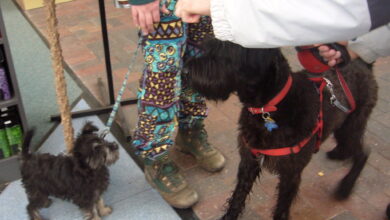
Your dog sits. Your dog stays. Your dog gives you a paw on command — every single time, in the living room, with zero distractions. You’ve watched the YouTube tutorials, bought the clicker, gone through two bags of Zuke’s Mini Naturals in under a month. And then you take him to the farmers market on a Saturday morning, and he acts like he’s never heard the word “sit” in his life.
That gap — between the dog who performs in your kitchen and the dog who listens when it actually matters — is where most training stalls out. And the reason isn’t that you haven’t practiced enough basic commands. The real problem is that most people treat positive reinforcement like a vending machine: insert treat, receive behavior. That mental model works at Level 1. It breaks down completely when real life shows up.
Real obedience — the kind where your dog makes good choices when you’re distracted, when there’s a squirrel 15 feet away, when a stranger is offering their hand — is built on something different. It’s built on a relationship where the dog is genuinely thinking alongside you, not just waiting for a food cue.
1. The “Kitchen Dog” Problem Is a Training Architecture Problem
Every trainer I’ve talked to names the same complaint from clients: “He only listens at home.” This isn’t a motivation problem. It’s a generalization problem, and it’s almost always caused by how reinforcement was structured in the first place.
When you teach a behavior in one context with one type of reward — say, a liver treat on your kitchen floor — the behavior becomes tightly bound to that context. The dog isn’t learning “sit means sit everywhere.” The dog is learning “sit in the kitchen gets me a treat.” That’s a subtle but enormous difference.
Research in animal learning has shown for decades that behaviors need to be reinforced across varied environments, at varied reward ratios, and with varied reinforcers before they generalize reliably. A behavior practiced in three locations is meaningfully more durable than the same behavior practiced 300 times in one spot. Three locations beats 300 repetitions. Most people don’t know that, so they drill at home and then wonder why their dog falls apart at the vet’s office.
2. Move the Reward Inside the Relationship, Not Outside It
Here’s the shift that changed how I train: stop thinking of the treat as the reward and start thinking of your attention, your voice, your touch, and your engagement as the primary currency. The treat is a marker. The relationship is the reinforcer.
This isn’t abstract. It means that when your dog checks in with you voluntarily — glances at you on a walk, pauses at a curb without being asked, stays close when another dog passes — you make that moment count. Eye contact. A quick “yes, good.” Maybe a treat, maybe not. The point is that the dog learns that orienting toward you pays off, not just executing a specific command on cue.
Patricia McConnell, an applied animal behaviorist whose work on the dog-human bond is widely cited in training circles, has written extensively about how dogs read human social signals in ways we routinely underestimate. The implication for training is direct: dogs that have been taught to watch their people — not just respond to verbal commands — perform far more reliably under pressure. They’re looking for information, not waiting for a food cue.
3. Raise the Criteria Without Losing the Dog
The technical term is “criteria raising,” and it’s where most amateur training breaks down. You get a solid sit. Then you ask for a sit with a slightly louder noise in the room. The dog hesitates. You lure with the treat. And you’ve just accidentally trained your dog that hesitating gets a lure.
The better approach is what trainers call a “no reward marker” — a neutral signal, not a punishment, that communicates “that didn’t earn the reinforcer, try again.” Something as simple as a quiet “nope” or turning slightly away. Then waiting. Most dogs will offer the behavior again within seconds if they’ve learned that offering behaviors pays. The key word is if. You have to build that foundation first.
Raising criteria should happen in small enough steps that the dog succeeds roughly 80% of the time. Not 100% — that means it’s too easy. Not 50% — that means you jumped too far. The 80% rule isn’t arbitrary; it reflects the learning curve where engagement stays high and frustration stays low. Keep a tally if you have to. Seriously — even three training sessions with a notebook will tell you more about where your dog’s threshold is than a year of gut-feel training.
4. What a Real Before-and-After Looks Like (Including the Messy Middle)
I worked with a three-year-old border collie mix named Atlas for about six weeks. His owner, a nurse who worked 12-hour shifts, had done solid basic obedience work — Atlas had a reliable sit, down, and recall in her apartment. But on walks near the park, he was a different animal. Leash-reactive, unable to hold a stay longer than four seconds if a jogger passed, and impossible to call off a scent trail once he’d started following it.
Week one: we didn’t add any new commands. We just changed where and how reinforcement happened. Short sessions — 8 to 10 minutes — outside on a relatively quiet street, with check-ins reinforced heavily and no commands given unless she was confident he’d succeed. The goal was rebuilding his habit of looking at her.
Week two went badly on Tuesday. Atlas got fixated on something in a bush and she pulled the leash and said “come” in a frustrated tone. He ignored it. She said it again, louder. He ignored it again. By the time he finally came over, she’d said “come” four times and the recall was already contaminated. We talked about it the next session. The lesson: don’t give a command you’re not prepared to reinforce. If he’s not going to respond, don’t say the word. Walk over to him, interrupt calmly, reset.
By week five, Atlas was holding a down-stay for 45 seconds while joggers passed at 20 feet. Not perfect — one particularly fast cyclist blew that completely. But the baseline had shifted in a way that felt real. His owner said he’d started checking in on his own during walks, without being asked. That’s the marker. That’s what generalization actually looks like.
5. Build Duration, Distance, and Distraction Separately — Not Together
Every experienced trainer will tell you this. Almost no one actually does it.
The three D’s — duration, distance, and distraction — are separate variables. When you’re working on duration (how long your dog holds a stay), there should be minimal distance between you and minimal distraction in the environment. When you add distance, shorten the duration and reduce distraction. When you’re proofing against distraction, work close and keep the duration short.
The reason this matters practically: if your dog breaks a stay, you need to know why. Was it the duration? The distance? The distraction? If you’re varying all three at once, you can’t diagnose the failure. And without a diagnosis, you’re just repeating the same session hoping for different results.
A simple way to track this: use your phone to note what variable you’re testing that session, and what the dog’s success rate was. You’ll probably discover that distance is easy for your dog and distraction is the real ceiling. Or the reverse. Either way, you’ll know where to spend your training budget.
6. What Doesn’t Work — And Why People Keep Doing It Anyway
Here’s where I’ll be direct, because a lot of popular advice is actively counterproductive.
- Repeating commands until the dog complies. Every repeated “sit, sit, SIT” teaches the dog that the first “sit” is optional. You’re training him to wait for the third or fourth repetition. Give the command once. If he doesn’t respond, help him into the position or walk away and reset. One cue, one chance.
- Fading treats too fast. A lot of people hear “you shouldn’t always have a treat” and interpret it as “stop treating after a few sessions.” That’s not what variable reinforcement means. Variable means unpredictable, not rare. Early in training, you should be reinforcing the large majority of correct responses. You thin the schedule gradually, over weeks, not days.
- Punishing after the fact. If your dog chewed the couch 20 minutes ago and you come home to find it, punishing him now does nothing except make him anxious around you when you walk in the door. Dogs don’t have the working memory to connect a correction to something that happened while you were gone. This is documented in animal cognition research going back to the mid-20th century. Knowing this doesn’t make it less frustrating — but acting on the frustration makes training harder, not easier.
- Training only when there’s a problem. The dog pulls on the leash, so you do three sessions of leash work. He improves, you stop. Two weeks later he’s pulling again. Training isn’t a repair job. It’s an ongoing conversation. Even five minutes, three times a week, maintains what you’ve built. Stop, and the behavior drifts back toward what’s naturally reinforcing for the dog — which usually isn’t what you want.
7. Reinforce the Thinking, Not Just the Behavior
The highest level of obedience training — and the one that almost no one talks about in basic classes — is reinforcing the dog for making good decisions, not just executing commands.
This looks like: your dog notices a child running toward him, glances at you instead of charging forward, and you immediately mark and reward that glance. You haven’t asked for anything. He offered a thoughtful response to a trigger, and you noticed. That kind of reinforcement builds a dog who is genuinely partnering with you, not just following a script.
It also looks like reinforcing incompatible behaviors before problems happen. If your dog tends to jump on guests, the solution isn’t just punishing the jump — it’s heavily reinforcing four feet on the ground when someone approaches, so that the dog has a competing habit that’s been reinforced enough to beat the excited greeting impulse.
The goal, if you want to put a fine point on it: a dog who would rather check in with you than do the thing the environment is pulling him toward. That doesn’t come from 500 repetitions of “sit.” It comes from 500 moments of making yourself the most interesting, most reliable, most worth-paying-attention-to thing in your dog’s day.
Three Things You Can Do Before the End of This Week
Don’t restructure your entire training program. Start here:
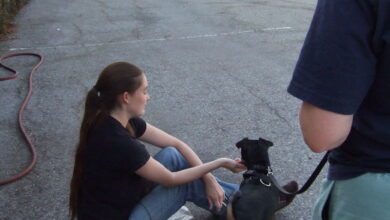
Pick one location you’ve never trained in — a parking lot, a friend’s backyard, the sidewalk outside a coffee shop — and run a five-minute session there with something your dog already knows well. Just that. See what happens to his performance and you’ll understand generalization faster than any explanation I can give.
For three consecutive walks, mark every voluntary check-in. Every time your dog looks at you without being asked, say “yes” and give a treat. Don’t ask for anything else. Just reinforce the orientation. By the third walk, most dogs start offering it more frequently. That’s the beginning of a real working relationship.
Practice one command once, then stop. Not five repetitions. One. Make it count — set up the environment so he succeeds, reinforce well, and move on. See if the quality of that one repetition is higher than the third or fourth repetition usually is. It almost always is.