Axolotl Ownership Tips: What Nobody Tells New Keepers
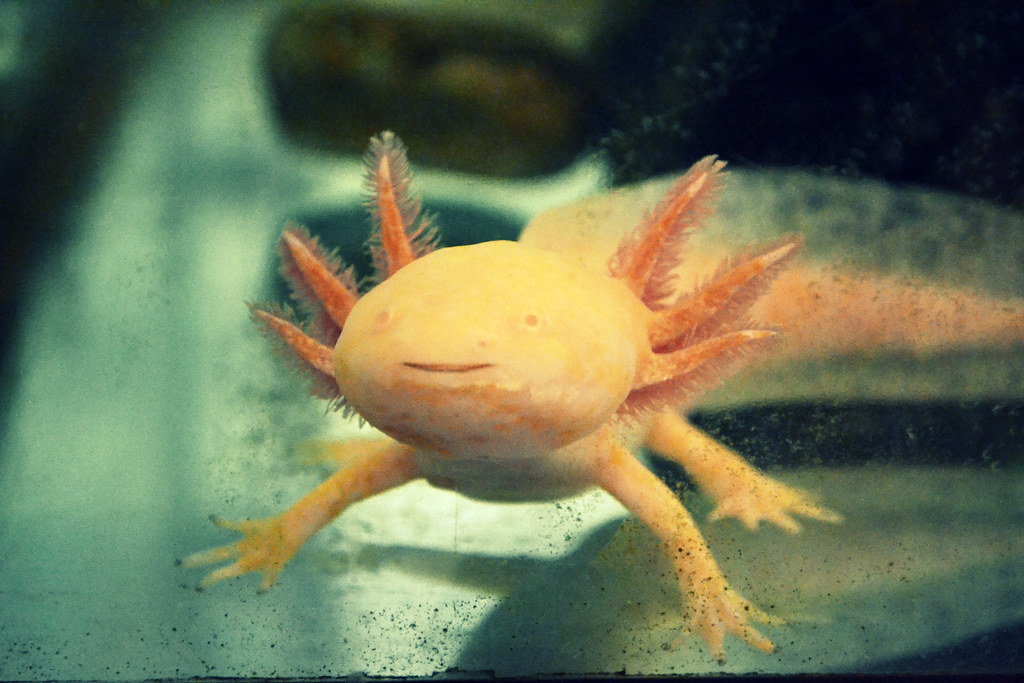
It’s 11:23 p.m. and you’re staring at a cloudy tank, watching your axolotl sit motionless on the substrate like a tiny alien that has given up on life. You’ve had her for six weeks. You followed every beginner guide you could find. You got the tank, the filter, the water conditioner. And yet something is clearly wrong — you just don’t know what.
That moment is where most new axolotl keepers actually are, even if they’d never admit it in a Facebook group. The problem isn’t that the information doesn’t exist. The problem is that most beginner resources tell you what to buy and almost nothing about how these animals actually behave, fail to thrive, and quietly suffer in the wrong conditions. Axolotls are sold as “beginner-friendly” at pet expos and online shops — and that label does real damage, because it sets up a false expectation that they’ll tolerate the same margin of error as a betta fish. They won’t.
I’ve kept axolotls for over four years. I’ve made nearly every mistake documented in this article. Here’s what nobody put in the guide I bought.
1. Temperature Is the Variable That Breaks Everything Else
Axolotls are cold-water animals. That’s listed everywhere. What isn’t listed clearly enough is how tight the window actually is: 60°F to 68°F (15°C to 20°C) is the functional sweet spot, and anything consistently above 72°F starts causing stress that compounds over days, not hours. By the time your axolotl stops eating and starts floating near the surface, the damage has been building for a while.
This is a genuine problem in the US, especially in states like Texas, Arizona, or Florida where ambient room temperatures make it nearly impossible to keep an unassisted tank under 70°F for most of the year. A basic aquarium chiller — not cheap, usually $150 to $300 depending on tank size — is often the single most important purchase a keeper in a warm climate will make. Fans blowing across the surface drop temperature a few degrees and work fine in mild climates or shoulder seasons, but they’re not a long-term solution in a house that hits 78°F indoors by June.
The mistake I made in my first summer: I used two fans, told myself it was “fine,” watched my axolotl get fungal patches on her gills by August. Temperature stress suppresses immune response. The fungus was a symptom of the heat, not the actual problem.
2. Your Cycle Isn’t Done When Your Test Kit Says It Is
New tank syndrome kills more axolotls in the first month than almost anything else. But here’s the part that gets glossed over: a tank can show zero ammonia and zero nitrite on a test kit and still not be stable. Bacterial colonies in a new tank are fragile, and a single large water change, a new decoration, or even switching filter media can crash your cycle partially — sending ammonia back up within 48 hours.
The API Freshwater Master Test Kit is the standard recommendation, and it’s genuinely good — liquid tests are more accurate than strips, full stop. But what you do with the readings matters as much as the readings themselves. Testing once a week isn’t enough in a tank under three months old. During that period, test every two to three days, and log the numbers somewhere — even a notes app on your phone works. A pattern of slowly rising nitrates with stable zero ammonia and nitrite tells you the cycle is holding. A single morning spike in ammonia with no obvious cause tells you something destabilized.
Industry surveys of aquarium hobbyists consistently show that ammonia spikes in the first 90 days are the leading cause of unexplained fish and amphibian loss — and axolotls, because of their sensitivity, are overrepresented in that statistic. Running the cycle with pure ammonia (fishless cycling) for four to six weeks before adding your animal is worth the wait every single time.
3. Gravel Will Hurt Your Axolotl. Use Sand or Bare Bottom.
This one gets mentioned, but usually buried three paragraphs deep in a setup guide. Axolotls are opportunistic feeders — they vacuum up food and, if the substrate is the wrong size, they vacuum up substrate too. Gravel pieces between 3mm and 15mm are the dangerous zone: small enough to ingest, large enough to cause intestinal blockages. And because axolotls don’t show obvious distress until a blockage is severe, you often won’t know something is wrong until your animal has stopped eating for ten days.
Fine sand — pool filter sand works well and costs around $10 to $15 for a 50-lb bag at most hardware stores — is the standard safe choice. It passes through the digestive tract without issue. Bare-bottom tanks are also completely valid, especially for quarantine setups or hospitals tanks, though some axolotls seem to stress slightly more without any traction surface.
Tile is a real option that some experienced keepers swear by: it’s easy to clean, gives traction, and creates no ingestion risk. Slate tiles cut to size work particularly well. Not glamorous, but functional.
4. Hides Matter More Than Decorations
Axolotls are not display animals in the way a reef tank is a display tank. They need places to feel covered and hidden, especially during the day, because they’re naturally more active at dusk and dawn. A tank with open space and a couple of plastic plants does not give an axolotl what it actually needs — it gives you a better view of an animal that’s slightly stressed all the time.
At minimum: two hides, positioned on opposite sides of the tank, large enough for the animal to fully enter and turn around. PVC pipe sections (4-inch diameter works for most adult axolotls) are cheap and easy to clean. Ceramic caves marketed for cichlids work fine. Terracotta pots with a notch cut in the rim work great and look decent too.
What doesn’t work: decorative items with sharp edges, narrow openings that trap a grown axolotl, anything painted with non-aquarium-safe paint. Check that any decoration is rated for aquarium use — not just “decorative” in the product listing.
5. Feeding Frequency Is Not a Fixed Formula
Most beginner guides say something like “feed every other day.” That’s a reasonable starting point and a bad rule to follow rigidly. Juvenile axolotls (under 4 inches) need food daily or close to it — they’re actively growing. Adults (over 6 inches) can comfortably go three to four days between meals, and in cooler water temperatures, their metabolism slows enough that overfeeding is a real risk.
The signs of an overfed axolotl aren’t always obvious: bloating, lethargy, and excess waste in the tank are the main ones. Excess waste spikes ammonia faster than almost anything else, which loops back to water quality, which loops back to immune function. It’s a chain.
Earthworms — specifically nightcrawlers, available at most bait shops — are the closest thing to a complete diet for an adult axolotl. They’re nutritionally dense, stimulate natural feeding behavior, and don’t foul the water the way some prepared foods do. Frozen bloodworms are fine as a supplement but shouldn’t be the staple. Pellets formulated for axolotls or salamanders work as a convenience food when worms aren’t available. Live feeder fish — guppies, rosy reds — carry disease risk and are generally not worth it.
What Doesn’t Work: Four Common Approaches Worth Skipping
1. Keeping axolotls with fish. It gets recommended constantly in beginner circles. It doesn’t work. Tropical fish need warmer water than axolotls can tolerate. “Cold water” fish species like goldfish are messy enough to crash water quality in a shared tank, and they nip at axolotl gills — which are not just decorative, they’re functional gill filaments that get damaged and don’t always fully regenerate. Keep axolotls alone or with other axolotls of similar size.
2. Using salt as a cure-all. Aquarium salt gets suggested for fungus, stress, and general “immunity boosting.” Axolotls are freshwater amphibians — they don’t need salt and don’t handle it well at the concentrations people typically use. It’s not catastrophic in small doses, but it’s not helpful either. For fungus, a diluted salt bath as a short-term treatment has some evidence behind it, but it’s not a substitute for addressing the root cause (usually temperature or water quality).
3. Medicating without a diagnosis. When something looks wrong, the instinct is to add something to the water. Resist it. Most common medications — particularly those formulated for tropical fish — can be toxic to axolotls. Methylene blue, for example, is widely used in fish keeping and genuinely dangerous to amphibians. Before adding anything to a sick axolotl’s tank, get a water quality reading, adjust temperature, and do a partial water change. That alone resolves the majority of non-injury health issues.
4. Assuming regeneration means invincibility. Yes, axolotls can regenerate limbs, portions of their heart, and even parts of their spinal cord — it’s one of the most remarkable biological traits of any vertebrate. That fact leads a lot of people to assume they’re resilient animals. They’re not. Regeneration is a capacity, not a buffer against poor husbandry. Chronic stress from bad water, wrong temperature, or inadequate diet will shorten a lifespan that should realistically reach 10 to 15 years in good conditions.
One Real Week, Honestly
Last February, I added a second axolotl to my 40-gallon tank — a rescue, about 7 inches, visibly underweight. I quarantined him for three weeks first (a 10-gallon tub with daily water changes and no substrate, which is not pleasant to manage but genuinely necessary). He came in with minor gill damage and one missing front toe, which has since grown back most of the way.
Week one in the main tank: he didn’t eat for five days. I panicked on day three, tested the water twice, found everything stable. On day six he took a nightcrawler. By week three he was competing aggressively for food and I had to feed them in separate corners of the tank to prevent stress. Not a smooth transition — but not a failure either. The quarantine period was the thing that made it work.
Start Here This Week
If you’re in the first three months of axolotl keeping — or about to start — here are three things you can do before the weekend:
- Buy a thermometer if you don’t already have one that logs min/max temperatures. A cheap digital aquarium thermometer with a memory function costs under $10 and tells you what’s happening overnight when you’re not watching. That data is worth more than anything else in diagnosing a struggling animal.
- Do a water test today and write the numbers down. Ammonia, nitrite, nitrate, pH. Not in your head — written down. You need a baseline before you can read a trend.
- Pick up a bag of nightcrawlers from a local bait shop this week. Even if you’re currently feeding pellets or frozen food, offer one live worm and watch your axolotl’s reaction. You’ll understand feeding behavior better from that one observation than from reading another guide.
The animal will tell you what it needs. You just have to be paying attention at 11:23 p.m. when it does.