Small Pets Perfect for Tight Apartments—No Noise Issues
My neighbor knocked on my door at 9:15 on a Tuesday night, genuinely worried. She’d heard something — a scratch, maybe a soft thud — through the shared wall of our building in a mid-rise in Denver. She wanted to make sure I was okay. I was fine. My guinea pig, Mochi, had just knocked over his wooden hay rack. That was the whole incident. We both laughed, but the moment stuck with me: even one of the quietest pets on earth had almost gotten me a noise complaint.
Here’s the thing most apartment pet guides get wrong. They treat “quiet” as a binary — either an animal makes noise or it doesn’t. But the real problem isn’t sound level. It’s unpredictability. A dog barking at 2 a.m. is a noise issue. A hamster running its wheel at 2 a.m. — every night, for three years — is a landlord issue, a neighbor issue, and eventually a sleep issue for you. The question isn’t just “does this animal make noise?” It’s “when does it make noise, how often, and will my building’s walls hide it?” That reframe changes the entire list of what works in an apartment in 2026.
Why Apartment Pet Choices Are Actually Getting Harder
Rental inventory in major U.S. metros has tightened, and with it, pet policies. Many newer buildings allow pets — but with restrictions that go beyond species. Some lease addendums now specifically name prohibited animals: ferrets, rabbits, reptiles over a certain length, and even some bird species. Industry surveys suggest that well over half of U.S. renters live in pet-restricted housing, and enforcement is stricter than it was five years ago. That means choosing the right small pet isn’t just about your lifestyle. It’s also about reading your lease before you fall in love with an animal at the shelter.
The other shift: building construction. Thin drywall, shared HVAC ducts, and open floor plans in newer “luxury” apartments carry sound differently than older plaster-walled buildings. A fish tank’s filter hum that was invisible in a 1970s brick building can vibrate through a 2022 construction’s hollow walls. These are real variables — and they matter more than most pet guides acknowledge.
1. Fish: The Apartment Pet That Almost Everyone Underestimates
I’ll say it plainly: a well-maintained freshwater aquarium is the closest thing to a perfect apartment pet that exists. No noise complaints. No pet deposit in most buildings (check your lease — many don’t classify fish as “pets” at all). No smell if you maintain it properly. And the research on stress reduction from watching fish is more robust than you might expect — multiple university studies have looked at aquarium exposure and measurable drops in heart rate and anxiety.
The catch — and there’s always one — is that setup matters enormously. A 10-gallon tank with a cheap hang-on-back filter running at full speed can produce a consistent gurgling sound that drives you insane by week three. The fix: a sponge filter or a canister filter positioned below the waterline. Under $40 difference in equipment, but it changes your daily experience completely. Bettas in a well-filtered 5-gallon tank, or a small community of tetras and corydoras in a 20-gallon long, are both genuinely manageable for someone working a full-time job who can commit to a weekly 25% water change.
What people don’t tell you: the first two to three weeks of cycling a new tank are frustrating and smell slightly off. Push through it. Once the tank is established, it practically runs itself.
2. Leopard Geckos: The Reptile for People Who Work Late
If you’re regularly home after 8 p.m. and your apartment runs warm, a leopard gecko fits your schedule in a way that almost nothing else does. They’re crepuscular — most active at dawn and dusk — which means by the time you’re winding down from your day, they’re just getting started. Handling time is real and possible. They don’t mind it the way many reptiles do, assuming you’ve socialized them young.
Noise level: essentially zero. The only sound a leopard gecko makes is a faint licking sound when it cleans its eyes, which you will find either endearing or alarming depending on your personality. They don’t vocalize, scratch walls, or run wheels.
The practical requirements: a 20-gallon tank minimum, a reliable thermostat for their heat mat (the Inkbird IBS-TH2 is one people in the reptile hobby actually use and trust), and a steady supply of live or frozen-thawed insects. That last part is the real filter. If the idea of keeping a small container of dubia roaches in your kitchen cabinet makes you nauseous, this pet isn’t for you. If you shrug and say “sure, whatever,” you’re probably fine.
3. Guinea Pigs: Social, Surprisingly Manageable, and Slightly Underrated
Yes, this is the animal that almost got me a noise complaint. But context: Mochi’s hay rack incident was genuinely exceptional. In three years of keeping guinea pigs in apartments — first a studio in Chicago, then a one-bedroom in Denver — I had exactly one noise-related moment that involved a neighbor. One.
Guinea pigs vocalize. They “wheek” — a high-pitched squeal — usually when they hear the refrigerator open or the rustling of a produce bag, because they know food is coming. It’s brief, it’s localized, and it’s honestly one of the most charming things about them. It’s not a bark. It won’t travel through a wall.
The more legitimate concern is smell. Guinea pigs need their cage cleaned every three to four days, minimum. Fleece liners instead of wood shavings dramatically reduce odor and are more cost-effective long-term. Two guinea pigs require a minimum 8 square feet of floor space — the standard commercial cages sold at most big-box pet stores fall short of this, which is why the guinea pig community has largely moved toward DIY C&C grid cages. They’re cheaper, bigger, and better. The grids and coroplast cost around $50 to $70 total if you source them yourself.
4. Budgerigars: The Bird That Works If You’re Honest About Timing
Budgies — budgerigars — are small parakeets that many apartment dwellers dismiss because “birds are loud.” That’s partly true and partly a misunderstanding of which birds are loud. Macaws are loud. Cockatoos are loud. A single budgie kept in a room with ambient noise from a TV or music is producing sound at a level that most apartment walls handle fine.
The honest caveat: two budgies are louder than one, and they tend to be most vocal in the morning — often starting around 7 a.m. If your bedroom wall is shared with a neighbor who works nights, this matters. One budgie, in a room that isn’t a bedroom wall, in a building with decent insulation — manageable. Two budgies in a studio apartment with paper-thin walls — probably not.
Budgies also need more interaction than most people expect. They’re social animals. If you travel frequently or work 12-hour days, a budgie will develop stress behaviors that are both sad to watch and counterproductive to the “quiet pet” goal.
What Doesn’t Actually Work — And Why People Keep Trying It
Let me be direct about four popular choices that sound good in theory and regularly cause problems in practice:
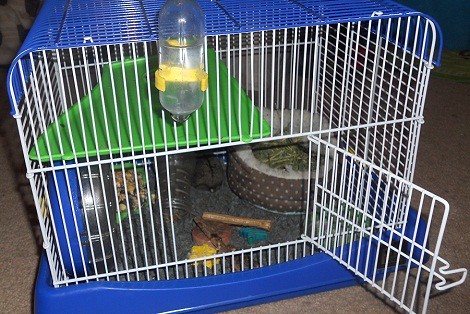
- Hamsters in standard cages: The wheel is the problem. Not all hamsters, not all wheels — but a Syrian hamster on a plastic wheel in a 400-square-foot apartment at 1 a.m. is a genuine quality-of-life issue. If you’re going to keep a hamster, get a silent spinner wheel (the Niteangel brand has a solid reputation in the small animal community) and a tank-style enclosure rather than a wire cage. The bar chewing alone from a frustrated hamster in a small cage will drive you — and possibly your neighbors — insane.
- Rabbits without proper space: Rabbits thump. When startled, annoyed, or trying to communicate, they slam their back feet against the ground with surprising force. In a carpeted apartment, this is manageable. On hardwood or tile — especially in a bottom-floor unit — it transmits directly to the ceiling below you. Rabbits also need significant floor time outside their enclosure, and an unsupervised rabbit that chews a baseboard or a charging cable will create problems that outlast the rabbit itself.
- Ferrets in no-ferret lease buildings: Ferrets have a distinctive musk that permeates carpets and walls in ways that are detectable at move-out inspection. No amount of air freshener compensates. If your lease prohibits ferrets — and many do by name — this is a real financial risk at security deposit time, not just a technical rule.
- Hermit crabs as “easy starter pets”: They’re sold this way, and it’s misleading. Hermit crabs need a very specific humidity range (70–80%), a temperature around 72–80°F, access to both fresh and saltwater, and shells in multiple sizes to molt into. Without this, they die slowly and quietly, which people mistake for thriving. They’re not the right choice for someone who wants a low-maintenance first pet.
A Real Week With Two Guinea Pigs in a One-Bedroom Apartment
Monday: Cleaned the fleece liner after work — took 12 minutes. Put it in the wash with unscented detergent. Tuesday: Forgot to buy bell peppers. Gave them some romaine instead. One of them (Miso, the dramatic one) refused it. Wednesday: My landlord’s maintenance guy came to fix the bathroom faucet. I had exactly 30 seconds of “uh, these are my guinea pigs, yes I checked my lease, no they’re not loud” conversation. He didn’t care at all. Friday: The hay rack incident. Neighbor knocked. We laughed. Saturday: Full cage scrub, fresh fleece, new water bottle filter. Sunday: Did absolutely nothing for them except refill hay and vegetables. That was the whole week.
Was it perfect? No. The Thursday evening wheek session when I opened a bag of kale was genuinely loud for about 45 seconds. But that’s the reality — not a crisis, not a complaint, just a moment.
Three Small Things You Can Do This Week
If you’ve been circling the idea of getting a small apartment pet and just haven’t moved on it, here’s a concrete starting point that doesn’t require commitment:
First: Pull out your actual lease and look for the pet policy section. Read it fully — not just the headline. Note exactly which animals are allowed, whether a pet deposit is required, and whether any species are explicitly named as prohibited. This takes 10 minutes and eliminates about half your decision-making uncertainty.
Second: If you’re leaning toward a fish tank, go to a local fish store — not a big-box chain — and just look around. Ask one employee what they’d recommend for a 10-gallon beginner setup. You’ll learn more in 20 minutes of conversation than in two hours of YouTube.
Third: If you’re leaning toward a small mammal or reptile, find one Reddit community dedicated to that specific animal (r/guineapigs, r/leopardgeckos, etc.) and read the pinned FAQ post. These communities are blunt about the downsides in a way that pet store employees often aren’t. That’s exactly the information you need before you decide.
That’s it. Lease check, one conversation, one FAQ. Start there.